

In the modern construction materials industry, the quality of the final product is determined at the earliest stages of the production cycle. Particular attention is paid to the prestressing process, where every mechanical component plays a critical role in ensuring the strength of the future structure. It is here that the clamp for strands, wire and steel reinforcement comes to the forefront, serving as an indispensable component for fixing wire or strands. The reliability of this small but technologically sophisticated part affects not only compliance with the geometric parameters of the product, but also the safety of the entire production process at a precast concrete plant. The correct selection of components helps minimize equipment downtime and reduce the percentage of defective products, which directly impacts the overall profitability of the enterprise.
Technological Principle and Fixation Mechanics
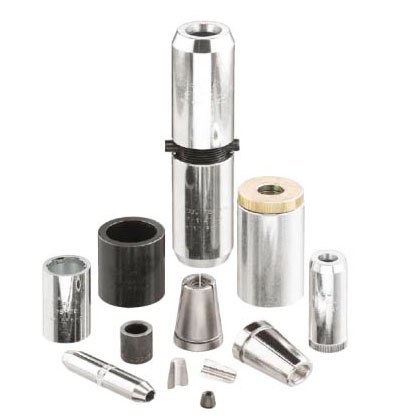
The operating principle of the system is based on converting axial tensile force into radial compressive force, which securely locks the reinforcement. The assembly consists of an anchor body and the gripping wedges themselves. When hydraulic equipment generates the required force, the clamp for strands, wire and steel reinforcement, under the influence of friction and the cone geometry, tightly grips the steel wire or strand. The higher the prestressing force, the deeper the wedges bite into the metal, completely eliminating any slippage. It is important to note that modern anchoring clamps are available in open and closed designs. Open types allow visual inspection of the process and are easier to clean, while closed versions protect the internal mechanism from concrete slurry and dust, significantly extending the service life of the assembly.
Industrial Applications
This technology finds its key application in modern plants utilizing slipform or long-line production methods. It forms the foundation for manufacturing prestressed concrete elements, ensuring high load-bearing capacity and precise geometry.
- Production of hollow-core slabs of various lengths and cross-sections.
- Manufacturing of prestressed railway sleepers and track support elements.
- Forming reinforced concrete poles for power transmission and lighting lines.
- Production of heavy-duty road and airfield slabs designed for high loads.
- Manufacturing long-span beams, girders, and lintels for frame construction.
During production line setup, the clamp for strands, wire and steel reinforcement is installed both in the active zone for connecting the hydraulic jack and at the passive end of the stressing bed. Reliable force fixation at these points ensures strict compliance with technology requirements and personnel safety until the prestressing force is transferred to the concrete.
Operational Advantages and Economic Efficiency
The choice of professional components is driven by their high physical and mechanical properties. High-quality gripping wedges are manufactured from high-alloy steel followed by heat treatment, which provides the required hardness and wear resistance. This allows a single set to be reused many times, significantly reducing consumable costs. In addition, a clamp for strands, wire and steel reinforcement from a proven manufacturer guarantees stable gripping even when the wire surface is contaminated, although regular cleaning and lubrication remain mandatory operating conditions. The use of reliable clamps prevents sudden strand failures, which can otherwise lead not only to equipment damage but also to serious safety risks.
Frequently Asked Questions (FAQ)
1. What is the main difference between open and closed anchors?
Open housings simplify cleaning and allow visual inspection of wedge positioning. Closed models feature a protective casing that prevents concrete and dust from entering the mechanism, significantly extending the service life of springs and wedges.
2. Are the wedges reusable?
Yes, they are reusable components designed for long-term operation. However, regular inspection is mandatory: the teeth must be checked for wear and integrity before each use to eliminate the risk of slippage.
3. Which reinforcement diameters are supported?
The product range covers the full spectrum of precast concrete plant needs: from thin wire (e.g., 5 mm) to high-strength prestressing strands with diameters of 9.6 mm, 12.5 mm, 15 mm, and larger.
4. Why does wire slip inside the clamp?
The main causes are usually contamination of the internal housing, excessive wear of wedge teeth, or mismatch between the anchor size and the diameter of the reinforcement used.
5. What materials are the components made from?
Key components are manufactured from high-quality alloy steel and undergo heat treatment (case hardening). This provides the necessary hardness for reliable gripping of high-strength prestressing steel.