

In conditions of dense urban development and increasing architectural demands, developers increasingly choose solutions that allow longer spans and fewer columns. Prestressing technology, in which hydraulic jacks play a key role, makes it possible to create lightweight yet ultra-strong structures for residential complexes and commercial facilities. The use of German PAUL equipment guarantees flawless implementation of these design solutions.
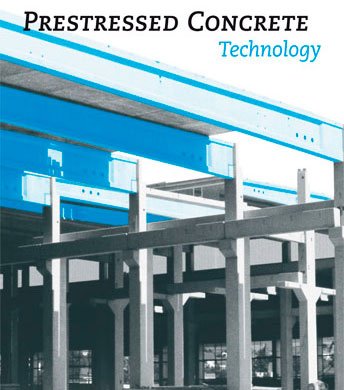
Prestressing Mechanics in the Civil Sector: From Theory to Practice
The essence of the method lies in tensioning steel reinforcement within the future structure before concrete casting or before the concrete reaches its final strength. As the reinforcement tends to return to its original state, it compresses the concrete, significantly increasing its resistance to tensile stresses.
Prestressing technology using high-pressure hydraulic jacks requires exceptional precision: even minimal deviation in applied tension force may result in slab geometry distortion.
PAUL equipment is equipped with digital monitoring systems, enabling control of every stage of the process and ensuring full compliance with project documentation.
Scaling in Civil Construction: Key Application Areas
The use of prestressed elements in civil construction significantly reduces construction timelines and lowers overall material consumption.
- Multi-storey residential buildings: Creation of beamless slabs with long spans, enabling flexible apartment layouts.
- Underground parking structures and shopping & entertainment complexes: Increased column spacing for convenient vehicle movement and efficient use of commercial space.
- Sports arenas and concert halls: Construction of reliable large-area roofs without intermediate supports.
- High-rise buildings: Use of prestressed structural frames to improve seismic resistance and overall building stiffness.
Prestressing technology using hydraulic jacks ensures high formwork turnover rates and minimizes the risk of cracking in structural elements.
Advantages of PAUL Hydraulic Systems for Developers and Precast Plants
Choosing equipment from the global market leader addresses the main challenges of the construction business: reliability, speed, and safety.
1. Benchmark precision: Tensioning deviation is reduced to a minimum, preventing reinforcement overconsumption and product defects.
2. Compact size and low weight: PAUL jacks are easily handled manually on-site without the need for additional lifting equipment.
3. Universal gripping systems: Capability to work with various wire and strand types (including Y1860 grade)
without lengthy equipment reconfiguration.
4. Long service life: High-grade steel of the gripping collets ensures thousands of tensioning cycles without replacement of consumables.
Leadership in Prestressing Technologies
Integration of advanced solutions into the production process is the only path to leadership in the precast concrete and cast-in-place construction market. Prestressing technology using PAUL hydraulic jacks enables the realization of the most ambitious architectural projects while guaranteeing safety and economic efficiency.
We offer not just equipment, but a comprehensive technology solution for your business. Contact us for professional consultation to select the optimal equipment configuration for your current projects and receive a return-on-investment calculation for PAUL systems.
Frequently Asked Questions about Prestressing
1. What is the main advantage of the technology in residential construction?
Prestressing technology using hydraulic jacks allows column spans of 12–15 meters. This enables developers to offer flexible floor plans without unnecessary beams or partitions.
2. How difficult is it to train personnel to operate PAUL jacks?
The equipment is designed for maximum ergonomics. Thanks to the low weight (models starting from 4 kg) and intuitive collet fixation system, basic operator training requires no more than one working day.
3. Can one jack be used for wires of different diameters?
Yes. Prestressing technology using PAUL jacks allows quick replacement of anchoring devices and pulling grips. The tool can be reconfigured for a different wire or strand diameter within minutes directly on-site.
4. How is tensioning accuracy controlled?
Control is performed via pressure gauges on hydraulic power units or digital pressure sensors. Prestressing technology using hydraulic jacks guarantees deviation of less than 1%, which is critical for the safety of high-rise civil buildings.
5. What is the service life of consumables (collets and wedges)?
With proper operation and the use of original PAUL lubricant, gripping jaws withstand several thousand tensioning cycles,
significantly reducing the cost per unit or per square meter of slab.
6. What operating pressure is required?
Standard working pressure for most single-stroke jacks reaches up to 400–450 bar. Prestressing technology using hydraulic jacks requires reliable hydraulic power units that ensure smooth oil supply without pressure shocks.